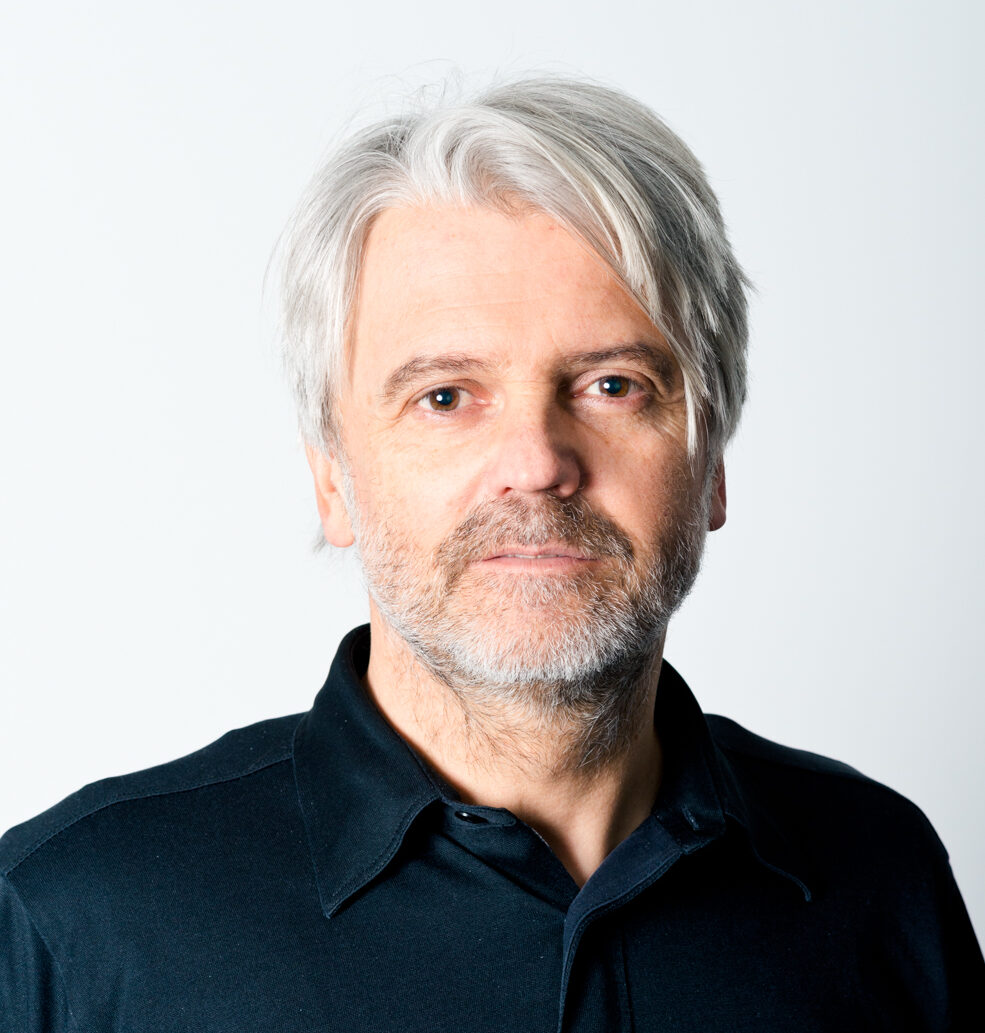

On Thursday, June 11th, 2026 at 15:00 PM (CET), we are hosting the CAS SEE Seminar with Azra Hromadžić on Watershed: Political Protest, Unski Život, and Riverine Citizenship in the Balkans in conversation with the RECAS Fellow Ajda Hedžet.
Robert Pichler
Azra Hromadžić is Professor of Anthropology and Laura J. and L. Douglas Meredith Professor of Teaching Excellence at Syracuse University. She has research interests in the anthropology of international policy in the context of state-making in postwar Bosnia and Herzegovina. Her first book, Citizens of an Empty Nation: Youth and State-making in Postwar Bosnia and Herzegovina (University of Pennsylvania Press), is an ethnographic investigation of the internationally directed postwar intervention policies in Bosnia and Herzegovina and the response of local people, especially youth, to these policy efforts. In 2013, Azra initiated a new project that ethnographically researches aging, care, and social services in the context of postwar and postsocialist Bosnia and Herzegovina. She co-edited (with Monika Palmberger) a volume titled Care Across Distance: Ethnographic Explorations of Aging and Migration, which was published with Berghahn Books in 2018. In 2017, she began a new research project on riverine citizenship, war ecologies, environmental degradation, social dispossession, and economic exploitation in Bosnia-Herzegovina. Her newest book, titled Riverine Citizenship: A Bosnian City in Love with the River (Riverine Citizenship: A Bosnian City in Love with the River), was published in 2024 with the Central European University Press.
About the Seminar
Over the past two decades, water in the Balkans has become a focal point of environmental and political transformation, as large-scale hydropower development has slowly reframed rivers as strategic resources for the green transition. However, in the Bosnian city of Bihać, the Una River has come to represent much more than just an energy resource.
It represents a lived, emotionally resonant landscape interwoven with local memories, identities, and collective belonging. Drawing on the concept of riverine citizenship, this seminar examines the protests that erupted against a planned dam on the Una River, when residents mobilized to defend it from infrastructural intervention. It explores how this moment of resistance transformed a deep but largely apolitical attachment to the river into a strong political force, revealing how ecological concern, emotional bonds, and place-based identity can give rise to innovative forms of citizenship.
Grounded in extensive ethnographic research, interviews, and archival work, the seminar interrogates the tensions between renewable energy agendas and locally rooted relationships to the river, to highlight how discourses of green transition and sustainability obscure processes of capitalist accumulation that risk reproducing environmental and social harm. Riverine citizenship emerges at this intersection as an important form of political action rooted in care, attachment, and resistance to the extractive transformation of nature.
Join Zoom Meeting
https://us02web.zoom.us/j/88989643663?pwd=VnZTOWRmdnl0WEZIdTczc1paZWtkdz09
Meeting ID: 889 8964 3663
Passcode: 328897
Fellowships
Fellowships are supported by OSF Western Balkans, ERSTE Foundation and Rockefeller Brothers Fund.
UNIRI The Moise Palace: Cres Island
An education center of the University of Rijeka. A five-hundred-year-old patrician townhouse and the largest Renaissance palace on the Croatian islands. A venue and forum for various scientific and research activities, it welcomes visiting academics, students and scholars.