Cultures of Rejection
Cultures of Rejection (CuRe): Understanding Polarization, Radicalization and Everyday Rejection in Contemporary Europe
Overview
Cultures of Rejection (CuRe) is an international collaborative research project that investigates the social, political, and cultural conditions underpinning the rise of polarization, radicalization, and exclusionary politics across Europe. Bringing together researchers from Austria, Croatia, Germany, Serbia, and Sweden, the project examines how contemporary crises in democracy, transformations of work, technological change, and shifting forms of everyday life contribute to the emergence of cultures of rejection.
Rather than treating rejection simply as an ideological phenomenon, CuRe approaches it as an everyday social practice. The project explores how individuals construct boundaries between “self” and “others” in response to experiences of economic insecurity, political distrust, migration, and cultural change. Particular attention is devoted to attitudes toward immigration, political elites, the media, gender equality, and liberal democratic values, analysing how these attitudes are embedded within ordinary social relations and everyday experiences.
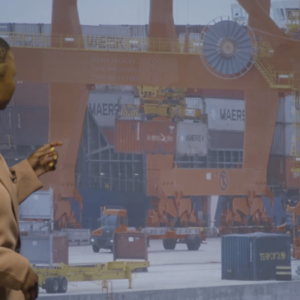
The empirical research focuses on employees in the retail and logistics sectors, where rapid processes of digitalisation, labour casualisation, and precarisation have fundamentally transformed working conditions. Through comparative research conducted along the 2015 migration route—from Sweden through Germany and Austria to Croatia and Serbia—the project combines workplace research, digital ethnography, and socio-spatial analysis to understand how changing conditions of work and everyday life shape cultures of rejection.
At the University of Rijeka, the Center for Advanced Studies Southeast Europe (CAS SEE) contributes its expertise in transdisciplinary research by integrating political theory, sociology, anthropology, migration studies, and cultural analysis. Project findings are disseminated through public lectures, workshops, international conferences, publications, and an extensive public video series designed to communicate research findings beyond academia.
Project duration
2020 – 2024
Funder
The project is funded by the Volkswagen Foundation (Volkswagen Stiftung) under the Challenges for Europe programme, supporting collaborative research addressing Europe’s major social and political transformations.
Total budget of project
€1,130,000
Partners
Coordinator
- Leuphana University Lüneburg / Humboldt University Berlin (Germany)
Project partners
- Center for Advanced Studies Southeast Europe (CAS SEE), University of Rijeka (Croatia)
- Institute for Research on Migration, Ethnicity and Society (REMESO), Linköping University (Sweden)
- Institute for Philosophy and Social Theory (IFDT), University of Belgrade (Serbia)
- Department of Political Science, University of Vienna (Austria)
Project objectives
The project seeks to understand how cultures of rejection emerge, develop, and become normalized within contemporary European societies by examining three interconnected environments:
- workplace transformations;
- digital communication environments;
- broader socio-spatial environments of everyday life.
The research asks:
- How do workers reproduce, negotiate, justify or resist cultures of rejection?
- How do digital environments amplify or transform exclusionary narratives?
- How do experiences of economic change, political crisis and cultural uncertainty shape attitudes toward democracy, migration and European integration?
- What similarities and differences exist across different European contexts?
Research methodology
CuRe employs a comparative qualitative research design integrating:
- semi-structured qualitative interviews;
- focus groups;
- workplace ethnography;
- discourse-centred digital ethnography;
- participatory observation;
- socio-spatial mapping;
- document analysis;
- expert interviews.
The project investigates three complementary research environments:
- Workplace environments, focusing on retail and logistics sectors;
- Digital environments, particularly online platforms such as Facebook and other spaces where political discourse circulates;
- Socio-spatial environments, examining neighbourhoods, mobility, care, consumption, leisure, and everyday social relations.
CAS SEE contribution
The Center for Advanced Studies Southeast Europe coordinates the Croatian research team and contributes to the project’s interdisciplinary theoretical framework by connecting political philosophy, cultural studies, migration research, sociology, and anthropology.
CAS SEE researchers conduct extensive fieldwork in Croatia, organise international workshops and conferences, collaborate with trade unions and civil society organisations, and contribute to comparative analyses across all participating countries. The Centre also plays a leading role in disseminating research findings through public engagement activities, including the CuRe Video Series, public lectures, and international academic events.
Expected outcomes
The project contributes to a deeper understanding of:
- polarization and democratic crisis in Europe;
- transformations of work under digital capitalism;
- political distrust and anti-democratic attitudes;
- migration and social cohesion;
- digital communication and online radicalisation;
- everyday practices through which exclusion and solidarity are produced.
Outputs include:
- comparative research publications;
- international conferences;
- public engagement activities;
- policy-relevant recommendations;
- digital dissemination through the CuRe Video Series.