
SciXsoc: Developing a New Interdisciplinary Master’s Programme in Science and Society
The Centre for Advanced Studies of Southeast Europe (CAS SEE) is involved in the international collaboration surrounding the development of a new interdisciplinary master’s programme, Science and Society, as part of the Erasmus project Science X Society: Training the Next Generation of Science-Society Communicators.
The programme is being developed in collaboration with partner institutions across Europe, including the University of Ljubljana and the University of Nova Gorica in Slovenia, the University of Klagenfurt in Austria, Ca’ Foscari University of Venice and the International School for Advanced Studies (SISSA) in Trieste, Italy.
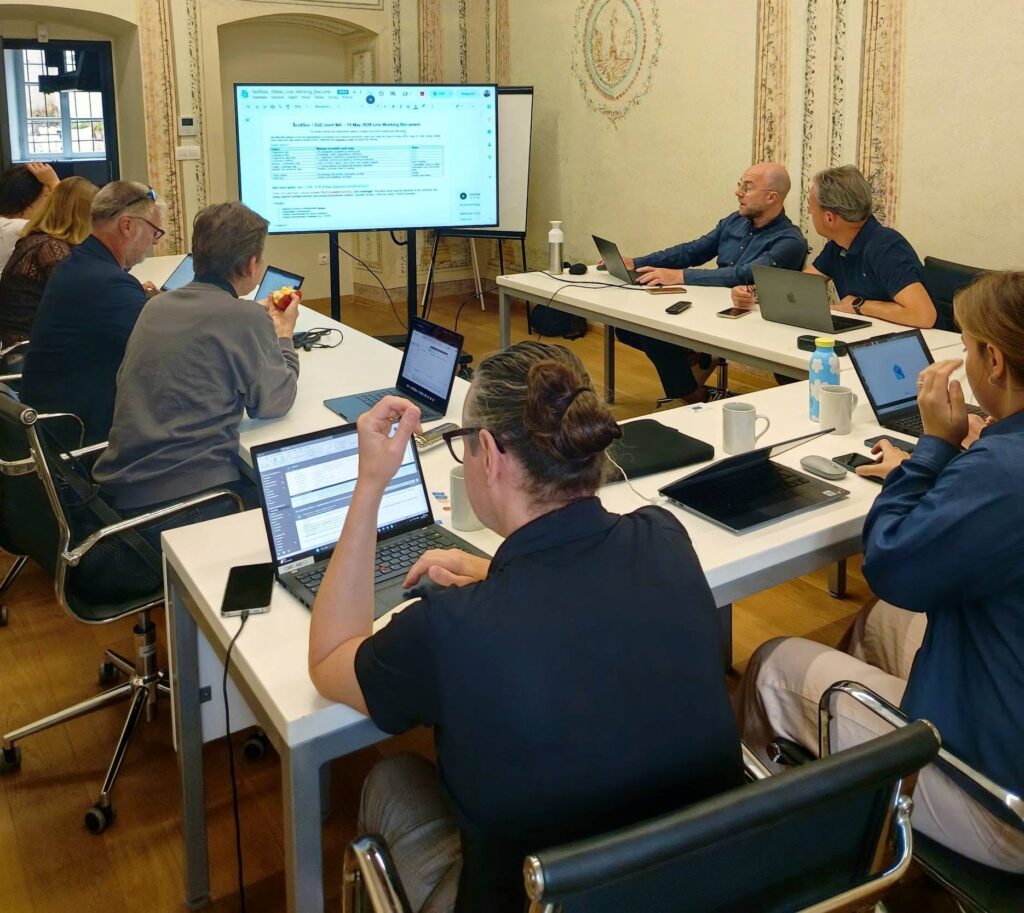
From 6 to 8 October 2026, representatives of the international consortium met at Moise Palace on the island of Cres to continue working on the content, structure and teaching approaches of the future programme. The meeting provided an opportunity to further develop a shared interdisciplinary framework that will connect science, society and public engagement.
The new master’s programme will bring together the natural sciences, social sciences, humanities and arts, enabling students to critically explore the complex relationships between science and society. Particular emphasis will be placed on science communication, public engagement and collaborative responses to contemporary social, environmental and technological challenges. Alongside opportunities for international mobility and flexible study pathways, the programme will feature case studies that connect different disciplines through real-world problems. It will also include Challenge Labs, where students will collaborate with researchers and practitioners to develop evidence-based approaches and solutions to selected societal challenges.
An important next step in the programme’s development will be the first SciXsoc Spring School, Cultivating Ecological Futures: Science, Society and Public Engagement, taking place from 26 to 30 April 2027 at Moise Palace on the island of Cres.
The interdisciplinary spring school will bring together students from diverse academic backgrounds to explore how science and society can work together to address complex socio-ecological challenges and contribute to more sustainable futures. Through collaborative activities, participants will develop practical skills in interdisciplinary cooperation, science communication and public engagement, while working on concrete responses to challenges, including those specific to island environments.
By connecting academic research with public engagement and real-world challenges, the SciXsoc initiative aims to strengthen dialogue between science and society and foster new approaches to addressing the complex issues shaping our shared future.