
CAS SEE Research Put to the Test — Through a Game
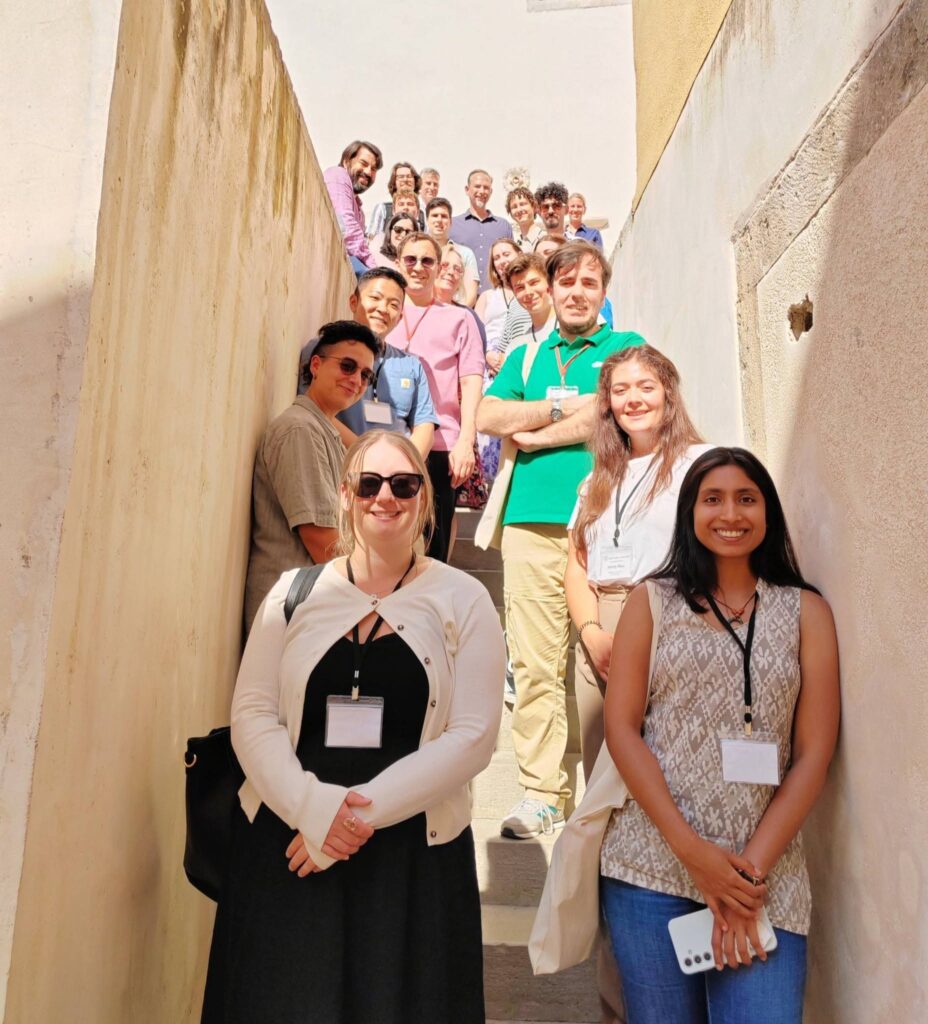
Our Senior Researcher Dr Sonja Stojanović Gajić traded the office for Moise Palace on Cres this July, bringing CAS SEE’s geopolitical research to the Summer School on Serious Games and World Politics (13–19 July).
On 15 July, she presented findings from GeoPower-EU, the Horizon Europe project CAS SEE contributes to, unpacking how the EU, the US, China, Russia, and Turkey have shifted their strategies toward the Western Balkans and the Eastern Partnership since 2022.
For this purpose, she designed a quiz to do the opposite of testing knowledge: it surfaced participants’ own assumptions about where nine EU candidate countries stand and how five powers have repositioned themselves. A few sample questions give a sense of the game:
● Match each country to its “relationship status” on the war in Ukraine: from “Committed Relationship” to “Still Won’t Post the Breakup.”
● Name the two countries that serve as China’s “anchor states” for reaching the wider Southeast European region.
● Identify the actor behind a 2026 policy statement declaring that “the nation-building era has passed” in the Western Balkans.
The week also gave CAS SEE’s research a afterlife: participants playtested StrategEUm, a strategy game on European geopolitics built within GeoPower-EU by the University of Belgrade’s Serious Games Lab, with feedback feeding straight back into its development. In a moment when alliances shift, disinformation spreads, and crises unfold faster than any curriculum can update, serious games let researchers and students alike test how decisions actually get made under pressure, not just read about it. That combination of rigorous research and lived experience is exactly where we think studies like ours can have the most impact.
It was a fittingly international room to make that case in: students and professors from IMSISS, the International Master in Security, Intelligence and Strategic Studies (Erasmus Mundus), and from Ohio State University were among the participants, and several told us they’d like to bring the GeoPower Interdependence Database and its indexes into their own teaching.
A great reminder that research travels further when it leaves the page. Explore research, and publications behind the talk at geo-power.eu.