
Peter Kreko
“Breaking filter bubbles in informational autocracies“
Peter Kreko’s research project focuses on the social psychological processes of informational autocracies: regimes that can be successful through the manipulation of information. More specifically, he deals with the phenomena of informational autocratization in Central and Southeastern Europe, with a special focus on Hungary and Serbia. The study aims to analyze the mechanisms of state-sponsored information manipulation and explores viable strategies to counteract such practices. Drawing upon a comprehensive methodological approach that includes desktop research, interviews with key stakeholders, and comparative attitude surveys, the project seeks to shed light on the extent and impact of media centralization, the role of social-political polarization in the acceptance of disinformation, and the effectiveness of various resistance strategies employed by NGOs, journalists, and politicians. This research is important for understanding the evolving landscape of information manipulation within regimes with a hybrid nature both institutionally – combining features of democracies and autocracies – both geopolitically – with a Western and Eastern orientation at the same time. At the same time, the two neighbouring countries, while having many similar features in their politics, and professional, leader-centric spin of information, are very asymmetric in their integration into the Western institutional sytems (EU and NATO). By comparing the informational control strategies in Hungary and Serbia and extending the analysis to other Central and Southeastern European countries, the project not only provides an academic contribution to the field but also offers practical insights for policymakers, civil society, and the media to combat the challenges of informational autocracy.
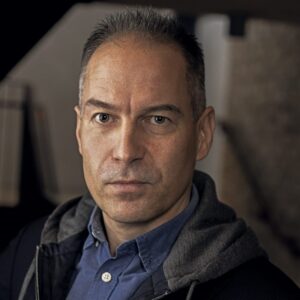
Péter Krekó is a think-tanker and an academic, with a background in social psychology and political science. He has a strong interest in disinformation, political polarization, conspiracy theories, and malign foreign influence. He has published extensively on these topics in academic journals and the leading international press. He is the director of the Political Capital Institute, a think tank in Budapest. It is currently the consortium leader for the Hungarian Digital Media Observatory, an anti-disinformation hub supported by the European Commission under the umbrella of the European Digital Media Observatory (EDMO).