
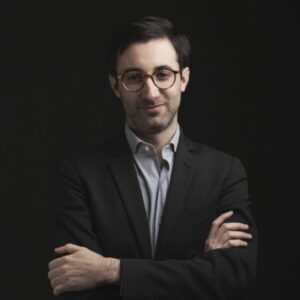
Gabriele Giacomini
The Utopia Of “Rousseauian Democracy” In The Digital Age:
A Liberal Critique
Through participation platforms and social media it is technically possible to “overcome” the mediation of the traditional political class and “directly connect” citizens and institutions. This has been the strategy adopted by the so-called “digital parties” in Europe, such as the 5 Star Movement in Italy. The first part of this research project consists of analysing the theoretical foundations of these new political organisations – foundations which can be found in the “republican” political theory by Jean-Jacques Rousseau (e.g. the M5S called its participation platform “Rousseau” – I will show why the reference is not accidental). However, this “republican 2.0” project faces some difficulties. The second part of the research aims to investigate (and systematise) the potential political dangers of a “Rousseauian” approach to digital technologies in democracies. In particular, a liberal interpretation will be adopted (with reference to authors such as Constant, Bobbio, Schumpeter, Dahrendorf, and Sartori). I believe that linking reflections belonging to the liberal culture (traditionally careful regarding the role of elites, the balance of powers and the limits on the “dictatorship of the majority”) with theoretical proposals and experimental practices typical of modern republicanism can enrich the scientific debate on freedom and participation in the digital age.
Gabriele Giacomini (1986) was awarded the Bachelor’s Degree in Philosophy and Theory of Forms at University of Udine and the Master’s Degree in Philosophy of the Mind, of the Human Person, of the City and of History at Vita-Salute San Raffaele University in Milan. Later, he received his Ph.D. in Philosophy and Sciences of Mind at Vita-Salute San Raffaele University in Milan and at IUSS in Pavia (Cognitive Neuroscience and Philosophy of the Mind
curriculum). He was also awarded the Master’s Degree in Social Foresight at University of Trento.
He published scientific papers on Italian and international journals. Among his books, the most remarkable are: “Psicodemocrazia. Quanto l’irrazionalità condiziona il discorso pubblico” (preface by Angelo Panebianco, Mimesis, Milan 2016), “Potere digitale. Come Internet sta cambiando la sfera pubblica e la democrazia” (preface by Michele Sorice, Meltemi, Milan 2018), “Architetti e ingegneri alla prova del digitale. Il caso friulano” (preface by Roberta
Paltrinieri, Franco Angeli, Milan 2020). He edited, with Luca Taddio, “Filosofia del digitale” (preface by Alberto De Toni, Mimesis 2020).
Thanks to his research studies, he won the award Premio nazionale Frascati filosofia “Elio Matassi” in 2017 (best new writer with the book “Psicodemocrazia”), the award Premio giovani SPe “Achille Ardigò” in 2018 (with the report “Il paradosso del pluralismo online” at the annual
convention “Sociologia per la Persona”), the award “Libro ComPol dell’anno” of Italian Association for Political Communication in 2019 (with the book “Potere digitale”).
He worked at “Enrico Mattei School” of Eni Corporate University and was a Council Member in the Municipality of Udine (2013-2018), where he was in charge of Innovation and Economic Development. He is a member of the Sociology Laboratory at University of Udine, of the Studies Centre of Ethics and Politics of Vita-Salute San Raffaele University in Milan and of the International Study and Documentation Centre for Youth Culture in Trieste. He’s currently
collaborating with Fondazione Giannino Bassetti in Milan (scientific director of the research project “Habeas Mentem. Teorie e prassi per una cittadinanza digitale autonoma e consapevole”) and University of Udine (academic coordinator for the Master’s degree in “Filosofia del Digitale” and postdoctoral researcher at the Humanities Department).