
Tamara Banjeglav
“Give peace a chance: Remembering slow-moving processes in the age of fast commemorations in a post-conflict environment“
Public commemoration of conflict is mostly represented in anniversaries, commemorative plaques, monuments, memorials, and museums. These rituals of remembrance are usually widespread, readily available, and easily consumed. However, as this project argues, conflicts and instances of violence are not the only events worth commemorating scholars should pay attention to.
The project seeks to move the attention from commemorating conflicts to their aftermath by examining slow-moving transformations which cannot be marked with conventional commemorative rituals. As opposed to “fast memory” of the conflict, the memory of peace can be said to be “slow-moving” and lacking conventional means of representation. The focus of the project is the peaceful reintegration of Croatia’s Danube region and its marginalization in Croatia’s collective memory of the war. The war in Croatia ended with military operations, but the final integration of the occupied territory into Croatia’s constitutional and legal framework was achieved with peaceful reintegration. A peace agreement was signed in Erdut on 12 November 1995 with the aim of reintegrating the occupied region and its population into Croatia’s institutional order, under the auspices of the UN Transitional Administration (UNTAES). Although UNTAES is considered one of the most successful UN peacekeeping missions, it is rarely marked and celebrated in Croatia as a success of a non-violent initiative.
The project examines peaceful reintegration in Croatia’s collective memory of the war to understand the lack of emphasis on this successful peace initiative in Croatia’s memory politics and to answer why peace is largely neglected in public memory of the war.
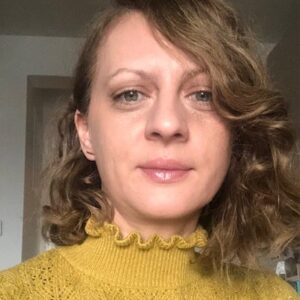
Tamara Banjeglav is a researcher in cultural studies, specifically in the field of memory studies.
She received her PhD from the University of Graz, where she also held a junior fellowship in the Field of Excellence “Dimensions of Europeanization” at the Centre for Southeast European Studies. She was a post-doctoral researcher on the project “Framing the Nation and Collective Identity in Croatia: Political Rituals and the Cultural Memory of Twentieth Century Traumas“, at the Department of Cultural Studies, University of Rijeka.
Her research interests fall within the fields of memory studies, identity politics, transitional justice, nationalism studies, and migration studies, particularly in the post-Yugoslav space.