
Illegal Landfills in the Past and Present
CAS SEE visiting researcher Hanna Stein:
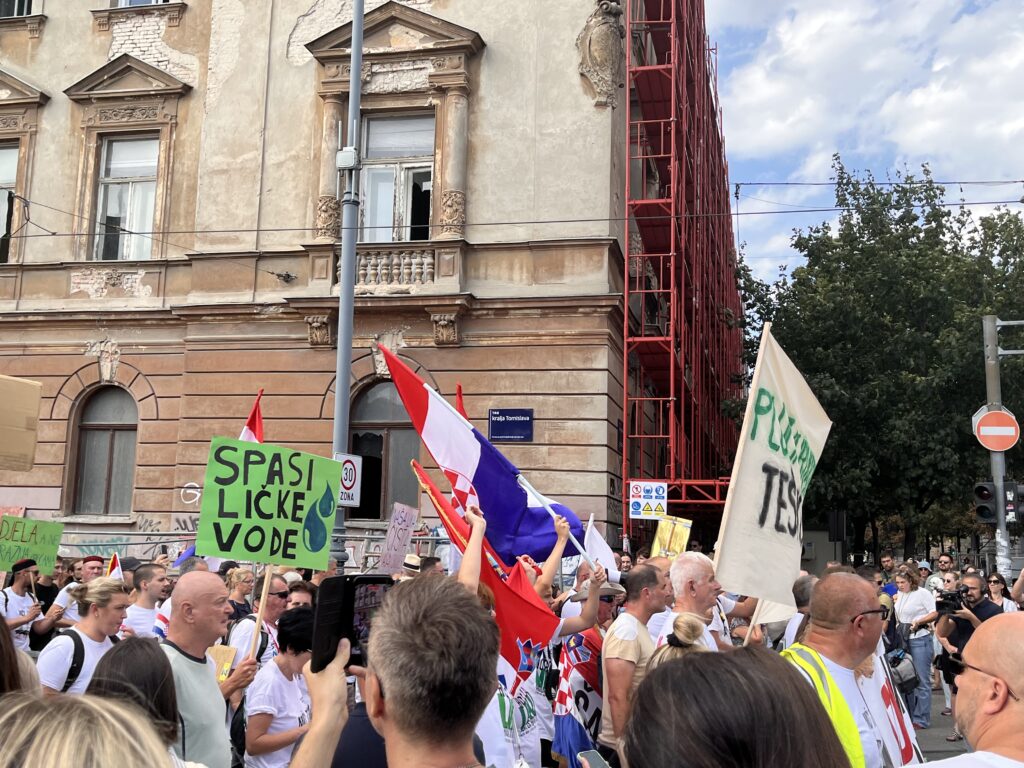
Although waste pollution has recently gained significant public attention, I did not anticipate how much my research fellowship at the Center for Advanced Studies in Rijeka would coincide with the current surge in public mobilization, attention, and media coverage around illegal toxic waste dumps in Croatia, including the recent, large protest with tenthousands participants in Zagreb. These events underscore the ongoing threats to local populations and ecosystems, illustrating how the “Wasteocene” is marked by systemic injustices and gradual, often invisible, environmental degradation. This contemporary urgency highlights the importance of understanding how such problems have developed over time, that being a question at the heart of my project, which focuses on the historical political ecologies of waste in Socialist Yugoslavia.
With my project “Up the Hill, down the River and into the Caves – A Historical Political Ecology of Waste in Socialist Yugoslavia” (funded by the Austrian Science Fund), I examine the political, cultural, social, and ecological dimensions of waste, discarding, and recycling. Drawing on the theoretical premises of discard studies, I combine archival research and discourse analysis to understand how waste was conceptualized and governed, while also investigating the spatial and social processes involved in waste (mis-)management. Fieldwork in Rijeka and the Lika region is an essential part of my project, allowing me to begin mapping both historical and contemporary waste disposal sites and to explore their origins and impacts.
This is precisely where my historically oriented research intersects with current developments. The persistence of illegal dumping practices demonstrates that past and present cannot be analyzed in isolation. My time at CAS marks the beginning of this inquiry, as I navigate the complexities of connecting historical legacies with contemporary realities.