
Lilit Dabagian
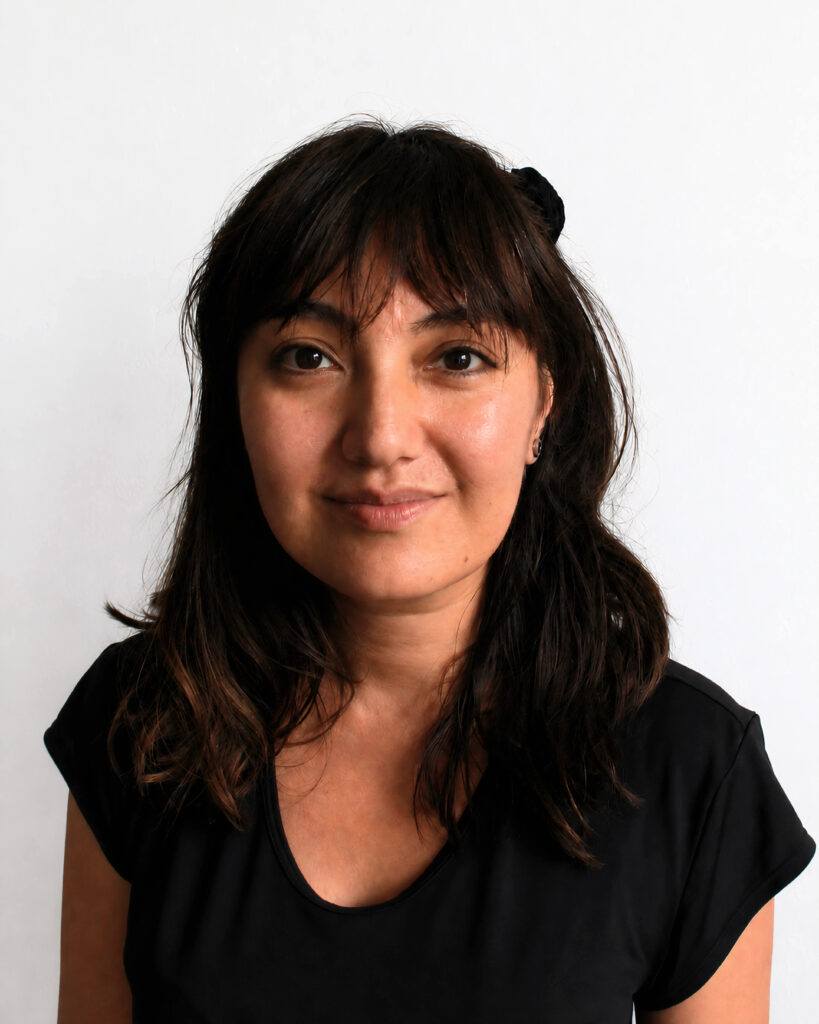
Lilit Dabagian is a researcher of media and historical anthropology with a distinct interest in informal archives, microhistory, and (post-)socialist experiences. She holds a degree in Philosophy (B.A.), Media Production (M.A.), and completed a non-degree program in Liberal Arts at Bard College Berlin. She publishes on transmedia storytelling and the musealization of conflictual past(s) in international peer-reviewed outlets and has delivered talks at universities in Berlin, Bishkek, Michigan, Reykjavik, and Tbilisi. In addition to her previous work as a lecturer at the University of Central Asia, she has been working for eight years as an education project designer in public history, collaborating with public and private foundations, including the Heinrich-Böll Foundation, the Friedrich-Ebert Foundation, and the Körber Foundation.
From the End of the World with Love. The Lettered Lives of an Armenian-Kyrgyz Couple Through the Soviet Collapse
At the intersection of Historical Anthropology, the Anthropology of Emotions, and Microhistory, the proposed project examines how the USSR’s collapse was experienced by a Soviet couple whose marriage spanned republic borders that were about to become international. Drawing on a private archive of some three hundred letters, it reconstructs the couple’s life trajectories both temporally, across the tumultuous period of 1988-1991, and spatially, across Central Asia and the Caucasus. As testimonies of longing, anxiety, hope, and disillusionment, the letters record glasnost, the Karabakh movement, the Spitak earthquake, and the economic crisis, and reveal the worlds of meaning constructed by the late-Soviet subjects far from the political center of the waning empire. How did they come to mistrust the old socio-political order, and how did they make sense of, appropriate, and embrace the promises of inhabiting a new world in the making? How were they, as a transnational couple, compelled to navigate their lives strategically in environments shaped by increasing ethno-nationalisms? The letters are complemented by interviews with the surviving spouse and the husband’s relatives and by visual materials that may eventually become a zine. Treated as an “exceptionally normal” case, their trajectory offers a view of imperial collapse from the periphery: subjects marginal to the Soviet project who, given their transnational life, remained marginal to the new nation-states.